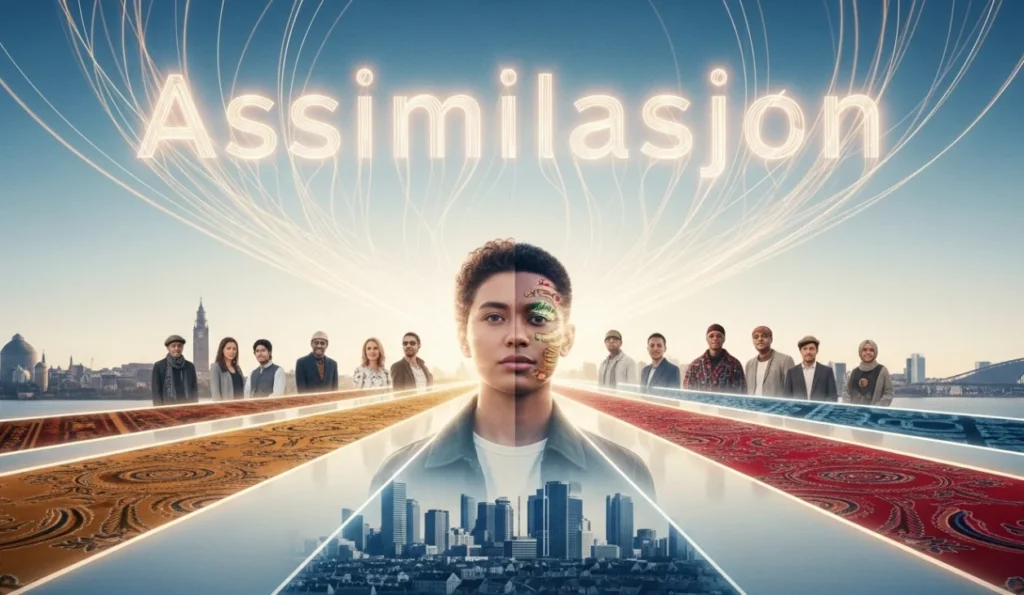
In an increasingly connected world, societies are becoming more culturally diverse than ever before. Migration, globalization, and technological communication have brought people from different backgrounds together in shared spaces. Within this context, the concept of assimilasjon plays an important role in shaping how individuals and communities interact with new cultures. While cultural diversity enriches societies, understanding how integration happens is equally essential. Therefore, exploring assimilasjon helps us understand the balance between cultural identity and social cohesion.
What Is Assimilasjon?
Assimilasjon refers to the process through which individuals or groups adopt the cultural norms, values, language, and behaviors of another dominant culture. Typically, this occurs when immigrants or minority groups gradually adapt to the customs of the society in which they live. Over time, they may begin to share similar traditions, social habits, and ways of thinking as the majority population.
However, assimilasjon is not simply about abandoning one’s heritage. In many modern societies, it involves blending aspects of different cultures while learning how to function effectively in a new environment. For instance, someone moving to a new country might learn the local language, follow social customs, and participate in community life, all while maintaining personal cultural traditions at home.
Because of these complexities, assimilasjon can occur in multiple stages and forms. Some individuals adopt new cultural traits quickly, whereas others integrate more gradually.
Historical Context of Assimilasjon
Historically, assimilasjon has been closely linked to migration and nation-building. During the 19th and early 20th centuries, many countries encouraged immigrants to adopt the dominant culture as a way of creating social unity. Governments and institutions often promoted language learning, shared education systems, and national cultural values.
For example, immigrants arriving in large cities frequently experienced pressure to adapt to mainstream cultural practices. Schools, workplaces, and public institutions became spaces where assimilasjon naturally occurred. Over time, second and third generations often became more culturally integrated than their parents.
Nevertheless, historical approaches to assimilasjon sometimes overlooked the importance of preserving cultural heritage. As a result, modern discussions emphasize a more balanced perspective that respects diversity while encouraging social participation.
Assimilasjon vs Cultural Integration
Although assimilasjon and cultural integration are sometimes used interchangeably, they are not exactly the same. Assimilasjon generally implies a stronger shift toward adopting the dominant culture, whereas integration allows individuals to maintain aspects of their original identity.
In multicultural societies, integration often becomes the preferred approach because it promotes diversity while encouraging cooperation among different groups. However, assimilasjon still occurs naturally through everyday interactions such as education, employment, and social relationships.
For example, a person might celebrate traditional holidays from their homeland while also participating in national celebrations of their new country. In this sense, assimilasjon and cultural identity can coexist rather than compete.
The Role of Language in Assimilasjon
Language plays a central role in the process of assimilasjon. Learning the dominant language of a society enables individuals to communicate effectively, access education, and build social networks. Without language proficiency, it becomes difficult to participate fully in community life.
Moreover, language often serves as a bridge between cultures. As immigrants learn new vocabulary and expressions, they also gain insight into social norms and cultural values. Consequently, language education programs are frequently one of the most effective tools for promoting successful assimilasjon.
However, maintaining one’s native language can also be valuable. Bilingual individuals often benefit from expanded cultural understanding and improved cognitive skills. Therefore, many modern societies encourage both language adaptation and heritage language preservation.
Benefits of Assimilasjon in Society
When balanced appropriately, assimilasjon can bring several positive outcomes for both individuals and communities. First, it helps newcomers navigate social systems more easily. By understanding local customs and expectations, individuals can build stronger relationships and participate more actively in civic life.
Second, assimilasjon can strengthen social cohesion. Shared cultural understanding reduces misunderstandings and encourages cooperation among different groups. Communities that successfully manage cultural diversity often become more innovative, resilient, and inclusive.
Additionally, assimilasjon can open economic opportunities. Individuals who adapt to local work cultures and communication styles often find it easier to pursue education, employment, and entrepreneurship.
Nevertheless, the process works best when societies also respect and celebrate cultural diversity rather than forcing uniformity.
Challenges and Criticisms of Assimilasjon
Despite its potential benefits, assimilasjon is sometimes criticized for placing too much pressure on minority communities. Critics argue that expecting individuals to abandon their cultural traditions can lead to identity conflicts and social inequality.
For instance, individuals may feel torn between maintaining family traditions and adapting to societal expectations. This internal struggle can affect mental well-being and community relationships.
Furthermore, forced or rapid assimilasjon can lead to the loss of valuable cultural knowledge. Languages, customs, and traditional practices may disappear when younger generations feel discouraged from preserving them.
Because of these concerns, many scholars advocate for more inclusive models of cultural interaction. Rather than emphasizing complete assimilasjon, they promote mutual adaptation where both newcomers and host societies learn from each other.
Assimilasjon in the Modern Globalized World
In today’s interconnected environment, cultural adaptation is evolving into a more flexible concept. Global communication, digital communities, and international travel allow people to maintain strong connections with their cultural roots even while adapting to new societies.
For example, immigrants can easily access media, language resources, and social networks from their home countries. As a result, cultural adaptation no longer necessarily means losing one’s original identity. Instead, it often involves navigating multiple cultural influences simultaneously.
Modern workplaces, universities, and cities increasingly value multicultural perspectives. Therefore, individuals who experience assimilasjon often bring unique insights that benefit innovation and global collaboration.
The Future of Cultural Adaptation
Looking ahead, societies will likely continue to develop more balanced approaches to cultural interaction. Policies that support education, equal opportunities, and open dialogue can make cultural adaptation a more positive experience for everyone involved.
Additionally, communities that respect cultural differences while promoting shared values tend to build stronger social foundations. By encouraging mutual understanding, societies can transform cultural adaptation into a process that enriches rather than diminishes cultural identity.
Conclusion
Assimilasjon remains a significant concept in discussions about migration, culture, and social change. While historically associated with adopting the dominant culture, the modern understanding of cultural adaptation emphasizes flexibility, inclusion, and mutual learning. Through language, education, and everyday social interaction, individuals gradually adapt to new environments while often maintaining elements of their heritage.
Ultimately, the success of assimilasjon depends on balance. When societies respect diversity while encouraging participation, cultural adaptation becomes a powerful force for unity and growth. In a world shaped by global movement and cultural exchange, understanding assimilasjon helps communities build bridges between traditions, identities, and shared futures.